Showing posts with label Review. Show all posts

Thursday, 3 December 2015

Simpsons by the Season: 26

"You know what we should really thank for our success? Lower standards."

It's the last season before catching up with the present day, which means this project I've started about ten months ago is finally coming to a close. Twenty six seasons later, I've seen it through it's inception, the golden years, the shockingly fast descent, a brief half-resurgence (at least in comparison) and another sharp decline. I haven't been enjoying the episodes for a while now, and, as you can see by the increased length between posts, it's becoming more of a chore than anything. Rather than feeling the satisfaction of completing a task, it's closer to being put out of my misery.

I had thought the series had hit somewhat of an end of history, descending into mostly tame episodes that are rather run of the mill and inoffensive; finally all dust and embers of it's once roaring fire. It's the way the show had been turning for the past while, and I foolishly thought the trend would continue. Oh boy. If only. While the mistakes are plenty, the theme of the errors this time around are simple; it all comes down to laziness.

More than ever, things feel loosely strung together as the episodes fail to reach a cohesive story. Guest stars come and go for seemingly no reason: Pharrell Williams just happens to be in Springfield without explanation; Elon Musk descends from a futuristic spaceship mostly just because. The effort in the writing in at least having a reason for the guest spots is shot, but that's not the only mistake here. Frequently the show feels like a pieced together variety hour with plots that come and go with only a tenuous link to the main story. The appearance of Elon Musk's spaceship (I can't believe that sentence has to do with a Simpsons episode) ends a segment of the show where the family captures an eagle - a segment that has nothing to do with the rest of the show but nevertheless takes up a good part of the beginning of the program. A similar idea occurs in an episode called "Sky Police" that has Clancy find a jet-pack to better monitor the town before crashing it into the church - where the plot goes to a gambling scheme. But what about the whole sky police angle of which the episode is named? Well, when Clancy said "this is the end of sky police" - only three minutes and fifteen seconds into the episode I might add. I guess that was the end of that plotline entirely. Even the endings of episodes have moments that appear tacked on just to fill space when they couldn't make up the entire twenty-one minutes. One ends with "The Simpsons Post-show Jug Band", which is entirely as it sounds; another is just a drug fueled trip from Otto. Neither is funny. Both are pointless. It plays like it's written by a child that's on a sugar-high.


The rest of the season is filled with what I've come to expect from the past few sets. Absurd storylines (Kang and Kodos are real, apparently), changes of character (just one off lines like "that's where I used to grow my weed, but that's a story for another day" tend to upset me - and by the way, Marge said that), and repeated stories (Homer and a rag-tag band he puts together become wildly popular, and Apu finds centre stage - but this time he doesn't change his last name to de Beaumarchais). They might as well just keep making seasons now, as long as it's making them money. What have they got to lose? It's no longer a cultural phenomenon; no one talks about The Simpsons anymore, and spouting quotes from the series stops beyond season eight. It's no longer well received or respected, as that died out long ago. So many of the writers have long since left, and they very nearly lost Harry Shearer. They said they wouldn't do a movie, but of course that didn't last. That would have required some integrity left in the show. Groening removed his name from the episode when they did a crossover with The Critic from the sixth season (pointing out The Critic has "nothing to do with the Simpsons' world" and "it violate[d] the Simpsons' universe"), and now they've done one with Futurama and allowed their characters to appear on a Family Guy crossover episode, the twisting of the knife in my side. I suppose it doesn't even matter when they stop now. To quote the show from a better time...

Stop, stop, it's already dead!

Best Quotes:
"Remember: we're parked in the ethnic princess section."
-Marge at a Disneyland-esque place

"We will always remember your countless appearances on the Krusty the Clown Show... and your one appearance on To Catch a Predator."
-Krusty getting roasted

"You don't have to announce it. Just do it quietly and blame the dog."
-Homer

Best Episode:
It's always safe to go with Krusty. "Clown in the Dumps", in which Krusty's dad dies, has a few pretty big laughs and a story that isn't total nonsense. Nowadays that counts as the default victory.

Worst Episode:
"The Man Who Came to Dinner" has the family visit the home planet of Kang and Kodos, the Halloween episode favourites. The quote "are we truly in space? And if so, why?" rings far too true. Maggie flying them home in a spaceship was taking the knife that was twisted in the Family Guy crossover and giving it serrated teeth. Bottom ten material, right here. A fitting way to end it.

Tuesday, 8 September 2015

Far Cry 4 Review

Overview:

Only so many games allow you to blow up a rhino with C4; Far Cry 4 is one of them.

There's a little more to it, though. Far Cry 4 follows Ajay Ghale's travels to the fictional, mountainous, and beautiful region of Kyrat. There, he hopes to fulfil his mother's final wish: to have her ashes spread in location of her choosing. As it turns out, things go south fairly quickly - the land is undergoing a civil war between tyrannical leader Pagan Min and the Golden Path, a band of revolutionaries hoping to take him down. As video games never side with the tyrannical leader you're going to be the one killing a whole bunch of evil soldiers fighting for Min, the pink-suited, metrosexual dictator.

Far Cry is engaging, undeniably fun, challenging and visually stunning; however, it is not without its flaws. The majority come in the second half in the game, when a first half that is polished and intriguing just doesn't continue as one would wish.

Visuals:
Far Cry 4 is an incredible feast for the eyes. The land of Kyrat is beautiful, and the style of the game lets you not only explore it at your leisure but fly through it, climb it, swim in it and drive over it. There were plenty of times when I would find myself taking a moment just to look around and take in the sights. It's vivid and colourful, and flying around in a junky flying machine or soaring past the mountains in a wing-suit is an experience in and of itself.

The motions and movements of the people, both when you're riddling them with bullet holes or having a discussion with someone about whom you should leave riddled with bullet holes next, are smooth and natural. This is a big thing when you're running a game that's particularly story driven - a character that comes alive in the voice acting can fall apart if the motions don't match, but Far Cry clearly put the effort in.

"Far Cry 4 is an incredible feast for the eyes."


Lastly, there is one stand-out in Far Cry that deserves special attention. There is a side-plot set of missions that are not necessary to complete to pass the game, but rather just to provide a degree of background to the mystical world of Kyrat. It sends you to the corrupted paradise of Shangri-la, a place of bright yellows and reds that is perhaps the most beautiful place I've seen in a video game. Basically, the whole land looks like this, but it doesn't really do it justice until it's on a big screen with so many sun-shafts coming through it looks like the an artillery barrage of light everywhere you turn. I rarely like side missions that separate you from the weapons, armour, or skills you have acquired along the way, but the sheer beauty of this segment of the game is well worth the time.

Gameplay:
If you played Far Cry 3 you're not really finding anything new here. The game requires stealth to take over outposts, meaning you stab many people in the back with knives or quietly dispatch them with a bow and arrow, or, more likely, you screw up and find yourself pulling out an assault rifle and blasting your way through, Rambo-esque. From the beginning, it's challenging and rewarding for those who possess a degree of planning and patience, and taking an outpost without a single one of the dead having known of your existence until you're carving them up like a Christmas ham is an incredibly satisfying experience.

The problem with Far Cry is the difficulty level isn't entirely maintained from start to finish. At some point you find yourself wielding a sniper rifle, allowing yourself to pick off enemies from the distance without them knowing where you've shot from. They counter with mortars, but for the most part they're not particularly effective. Suddenly, it's become easier to crouch in a hill somewhere and take your time bumping off unwary men in towers rather than sneaking through on foot. It turns from planning and nervous execution to simple point and shoot. Discovering explosives is next on the list, and again, it takes away a little bit due to the fact that C4 is about as devastating in the game as it is in real life (I would imagine). Lobbing a couple into a room tends to clear it out without much of a worry. It's also cheap enough that it's readily available, making the previously adequate difficulty level no longer applicable. Lastly, the most wildly overpowered weapon comes in the form of a simple side-arm. It's a hand-held grenade launcher that, by the end of the game when you have the upgrades for a better ammo belt and explosives pouch, holds more than you would ever need. Side missions that occur (like blowing up drivers of enemy vehicles) become mind-numbingly easy - a vehicle is no longer something that requires some clever driving and shooting to take down but rather one single shot from a weapon slot that held a sub-par pistol. Considering it's also an explosive, accuracy doesn't even really matter. Hit it close enough to the truck and it's game over. If they survive the first blast, well, shoot again. The repercussions for doing so are essentially nothing and the risk and strategy is cut to ribbons.

"The problem with Far Cry is the difficulty level isn't entirely maintained."


You can say "well, to get the achievements or to enjoy it more you can choose not to play that way", but video games don't work like that. The first time you play you use any advantage you can to complete the game. Far Cry, as much as I enjoyed it, isn't necessarily something I wish to play again - it's not a knock on it, but rather speaks to the nature of single-player campaign based games. The difficulty has to be spot on at the first attempt, and sadly, it falls short. The final mission in which there are plenty of enemies does not prove to be particularly difficult as a sniper rifle and grenade launcher (as well as very high powered assault rifles) make short work of whatever they throw at you. Higher numbers are irrelevant if they're not really strong enough to cause you any real harm (or to dodge your explosives). There is the occasional mission where stealth is 100% required or you lose instantly, but those were few and far between. They were also far and away the most challenging, rewarding, and ultimately the most fun.

Characters and Plot: 
*Careful: spoilers ahead for the rest of this blog.*
Admittedly, Far Cry 3 left a tough act to follow with the absolutely superb voice acting and characterization of Vaas Montenegro. Vaas stole the scene of every one in which he was featured, but can the same be said for Far Cry 4's Pagan Min? Well... sort of. Not quite. The beginning of the game has him torturing people (but treating you fairly well with a fine meal) and it certainly grabs your attention. But as the game progresses, he comes across as an eccentric but nothing in which you're all that interested in. I found myself asking why I even wanted to kill him so badly. That's disappointing when it's the driving force of your character's motivation.

The ending mission has you storming his castle, finding him once more at a dinner table much the same way the game started, and it's up to you to decide his fate. I decided, at first, to let him live. He led me to plant the ashes where they belonged from the beginning. I left the room to find him taking off in a helicopter. Panicked, and not wanting to let him get away, I pulled out (what else?) my side-arm grenade launcher and fired two well placed shots at the retreating helicopter. "THE KING IS DEAD" comes up on my screen. I've completed the game. I didn't even see Pagan Min die - I just saw his helicopter go down. I'd be lying if I said it wasn't a little disappointing. Not every game needs some big shock twist, but I need a little more to think about than a simple search for an enemy, finding him, and eliminating him much the same way I eliminated literally everyone else from the second half up until that point.

This poor ending isn't an isolated incident. Far Cry simply seems to have issues with the final results of characters, being able to build up all the interest and intrigue but ultimately letting it fall short. I felt the same way with the death of Vaas in the third instalment, and I felt pretty much the same way with everyone else in this game as well. I chose Sabal's path (the leader that is for religion and tradition at the cost of economics) leading me to kill Amita (who is the opposite of Sabal, believing in a drug trade economy that will help Kyrat flourish). When Sabal forces me to eventually kill Amita, it wasn't really all that exciting. He asked me to kill her. I went and killed her. Done. That section is over, and the repercussions for it were ultimately pretty minimal. It was building to it for so long, and when it finally happened the only reason it wasn't entirely predictable was because it was so predictable. I kept thinking something would happen that would change the course of things, but no - going much the same way as Pagan Min, with a build up to the death of a character followed by the expected death of that character. Everything about it was entirely expected.

"Far Cry 4 seems to have issues with the final results of characters, being able to build up all the interest and intrigue but ultimately letting it fall short."


The two most disappointing storylines were the side missions of Longinus, a born-again Christian and former African warlord, and Reggie and Yogi, two drug addicts. The warlord supplies the Golden Path (the anti-Min rebels of which you become a part) with a number of weapons. He continually sends you on missions to blow up, assassinate, or otherwise dispatch of whomever he feels like murdering, depending on his mood. Most of the missions are basically the same, to the point that Ajay actually states that he knows what Longinus is going to say next. There's a slight change in demeanor in the penultimate mission of his, when after going from his eccentric, loud and Bible quoting self to tearful and drunk, you wonder where the next turn in the story will take you. Suddenly you're interested, and you're hoping you see more into what makes a former warlord tick. You complete the mission he sends you on to find him packing up his stuff and leaving, giving you a final reward of a rocket launcher that is a bigger version of your all-powerful hand-held grenade launcher - but ultimately much less effective due to the fact that it only hits a little harder, and this one takes forever to reload. All that stuff that looked like it was building somewhere? No sir. Longinus' story flirts with progression, but in the end literally just packs up and leaves.

Yogi and Reggie, the most annoying part of Far Cry 4, fare no better as they frequently stab you with needles and send you on drug fueled adventures. I had hoped for some degree of progression with them as well, having their stories tie into the main one in some way. However, nothing really comes of it. The final time they drug you, you return to find them once more pleased at you finding your way back and inexplicably not bombing the heck out of them the way you do everyone else. They thank you for being such a good test subject. Again, nothing really happens with them and it leaves the story a little hollow. No big epiphany, no moment. They just say thanks and that's about it.

Synopsis:
Far Cry 4 is still an excellent game. The stealth missions are top notch, the visuals breathtaking, and the length of the game about what it should be considering it's a simple campaign focused game (I took no interest in what felt like needlessly tacked on multiplayer Call of Duty stuff). The combat is streamlined and sleek, similar to its predecessor but making improvements wherever they were needed. However, the second half of the game starts to fall apart due to having your weaponry and resources vastly surpass the abilities of your enemies. As well, all the intrigue and interest in the first half of the game in regards to character and story progression began to taper off, resulting in disappointing endings for literally every character in the game. It always left me wanting more, building towards payoffs that simply never came.

Sunday, 21 June 2015

The One True Nerd: Silicon Valley vs. The Big Bang Theory

Put Silicon Valley and The Big Bang Theory on paper and they're fairly comparable at their core - a band of nerds are unattractive but highly intelligent, stumbling through the world with computers and science as their socially awkward personas hold them back. The characters themselves are even relatively similar on a basic level: the main character and central nerd; the brown guy with an accent; the totally aloof weirdo who provides the core of the most outrageous, unrealistic comic relief; and the bonus religious character (a Satanist and a Jew, the last time I'll ever put those two in the same category). Typically, they'll spew indecipherable jargon you'll be at a loss at understanding unless you're in the specific field. Furthermore, for both of the show centres around the characters' success with women, or lack thereof.  Up until now one sounds like a knockoff of the other despite being them being entirely different programs; it would be like calling The Amazing Race similar to 16 and Pregnant because they're both reality shows. Their delivery in their humour, storytelling and intended audience is how they separate, and it's indicative of the differences between cable T.V. and a network that literally defines itself as more than television: CBC and HBO respectively.

The two shows appeal to vastly different crowds. BBT is a show for the masses, one that's simply easier to digest and meant to be enjoyed by anyone with a television and thirty minutes of spare time. Catchphrases help you find what was funny, and in case you missed it, laugh track reminds you. I mentioned the technical jargon of characters (mostly science mumbo jumbo that the majority wouldn't understand) but it isn't necessary to follow it in the least; in fact, it's better if you don't as many of the jokes centre around the non-physicists reacting to something complicated by simply making note of the fact that no, they in fact are not as smart. They will then demonstrate that by pausing briefly before saying they don't get it. Cue laugh track. That's how you know it was funny. Now, before I go too far, I don't want to say Big Bang Theory is devoid of humour - it's not. It has it's moments, the characters are for the most part likeable and it's better than most of the typical run of CBS shows (I'm looking at you, 2 Broke Girls). Honestly, it's a good show to have on in the background as you're doing something else...

...Which is key to my next point - the show's also differ in their delivery of continuing storylines. While Big Bang Theory has one, it isn't critical to the viewer's understanding of their episode by episode approach. I have not seen the last season or two but whenever I jump into an episode currently I won't miss out on much of the humour. Typically, it'll only be five minutes in before I also understand the crux of the season's plot thus far. Silicon Valley, however, has a linear progression to the storyline that is critical to the understanding of the show. It's not really a comedy that's meant to be tuned in on re-runs, but instead one that is watched steadily one to the next. In essence, it's a binge-watch show rather than a background runner. Unfortunately for shows of this variety, unless it's a comedy that gains almost immediate recognition - which is ultimately exceptionally rare - the viewership simply won't be as high due to accessibility for the viewer past episode one. I feel this is what killed the massively critically acclaimed Arrested Development (before, of course, it's resurrection) as so many of the jokes were based off ongoing themes, much would be lost on those tuning in mid-way through a season - perhaps after hearing of the show's quality. I would bet you anything that even if the two found themselves on the same channel, Big Bang would slaughter the other largely because of this reason. Mass appeal comes through accessibility.

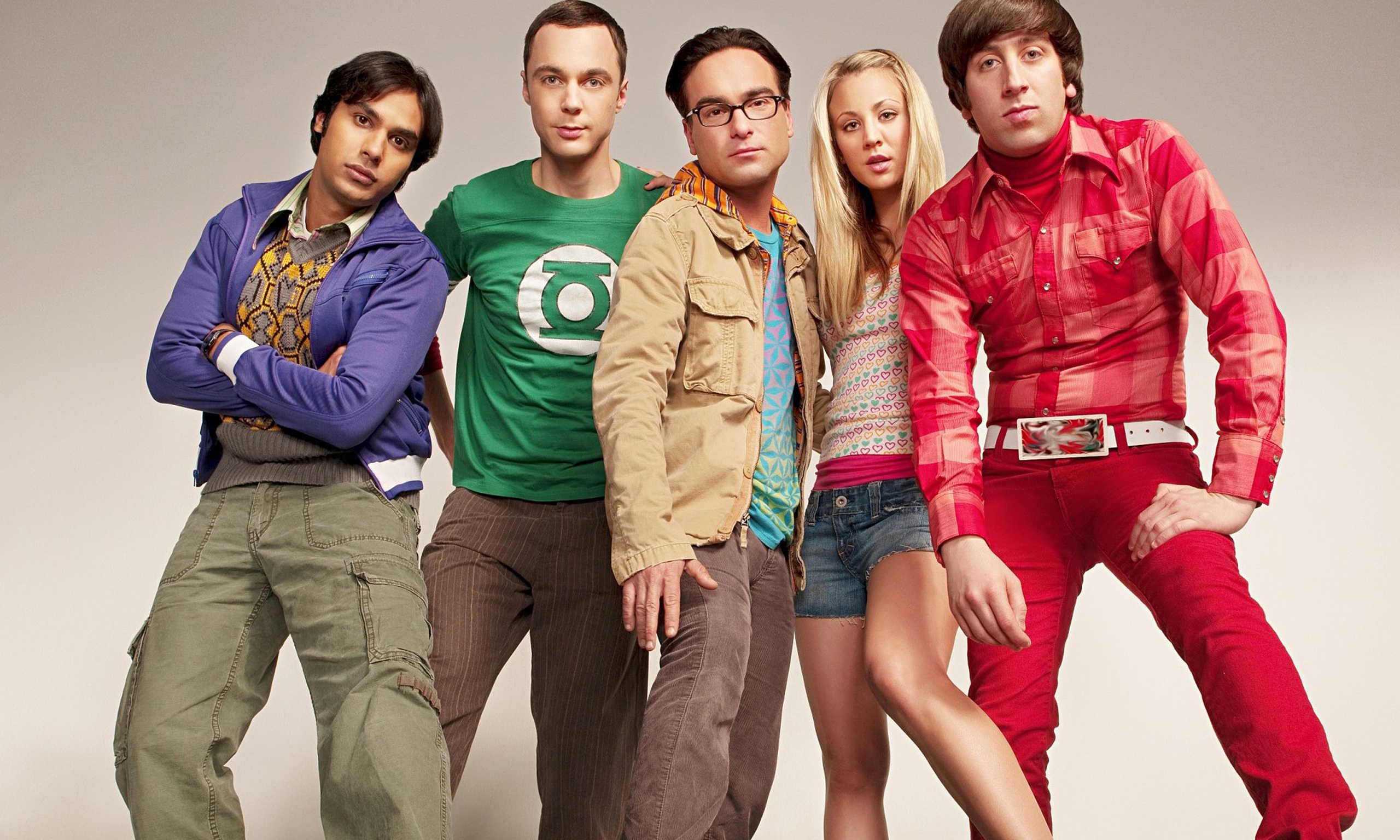
Deep down, the shows reflect what the networks want from them; CBS wants viewers, and thus went the route of mass appeal. HBO wants quality and recognition, and shot for a niche market. So what makes Silicon Valley niche and Big Bang Theory for the masses beyond the base outline of the networks on which they run? I would say take a look at the visuals. BBT is deliberately over the top, colourful, vibrant, filled with graphics on scene switches, and really strikes for excess in a number of ways; whereas Silicon Valley goes for more of a realism approach. That's what makes Silicon Valley niche. It's actually meant for people who are, well, nerdy. It's for those who are coders, programmers, computer geeks and the like or at the very least those that understand that world to some degree. Big Bang Theory is for nerd perception; it's what most people think nerds are like, but really a group that doesn't exist in reality. It's equivalent to the popular girl in high school who says "oh, I'm such a nerd!" because she plays Candy Crush on her phone. I mean, no one in the world dresses like this. It's the same reason all of these men - in spite of being social misfits - stumble their way through to date exceptionally attractive women time and time again, all the while complaining about their failures with wooing the opposite sex. This works because it's America, and you can be successful however you please, and that's the American Dream. On the other hand, the characters in Silicon Valley look the part (save for perhaps some degree of obesity) and after two seasons most of their characters strike out - with, of course, the exception of Erlich, the Silicon Valley version of Sheldon. Here it would be important to note that since they fill the same role in opposite worlds, Erlich is the only one repeatedly successful while Sheldon is reduced to the girl who played Blossom. Silicon Valley lives in the realistic world of lonely programmers, but that's just not what everyone wants to see. What everyone wants to see is Kaley Cuoco (pre-short-hair).

Neither show approaches nerd culture incorrectly (a great number of people will disagree with me on that) as at the core they're simply comedy programs. They're not bringing some sort of agenda, not trying to prove any great point, and if you don't like one or the other you can say it's not your thing and turn the channel. Deep down, it comes down to the same problem Andy Millman had in Extras - 
take the critical acclaim and be seen by few, or be seen by many and pass on the accolades. Personally, I'll watch both. The difference is with one I'll probably be making food with it in the background, and sitting down to watch the other once it's prepared.