Showing posts with label T.V.. Show all posts

Monday, 14 September 2015

Simpsons by the Season: 19

"Sometimes I think about getting on a bus and never coming back."


You know, I don't enjoy writing scathing reviews. It's hard not to come across as a whiner, or some real-life version of Comic Book Guy sitting behind his computer contributing nothing but judging everything. I miss the days where I struggled deciding which is the best episode of the season rather than sifting through the muck and mire and pulling out the best of a rotten bunch. Above all, I miss these characters of which I have given so many hours watching them develop (as well as throwing more than my fair share of dollars at merchandise, some of which even Krusty would be embarrassed of) and looking forward to Sunday night comedy slots where The Simpsons could very well be the highlight. I was just a touch too young to appreciate it's prime during the days in which it aired, but watching the repeats time and time again made me appreciate them all the more - especially as I aged and gradually understood it better. Watching it decline, bleeding out all the greatness it had is such a sad experience. So it is with a heavy heart I'm attacking you, Simpsons, because I know what you were and what you could be, but worse yet, I know what you are.


The writers have changed dramatically since the show's inception. Many of the very best have long since left, and they hired on a crew of new blood to push the longevity of the program. Sometimes I wonder if the newbies have watched the show since the beginning the way so many true Simpsons fans have. They forget the Simpsons have always been a family that just kind of gets by. Lisa is the only one with any real brains except for perhaps Marge to some degree, and Homer and Bart stumble through. At the core, they're the average, every-day family; even if you're not a fan of the show, you probably would know this anyway just through general pop-culture knowledge. So when did they suddenly become so talented at whatever they so please as they have in the past few seasons? 

In this season: Homer can suddenly sing incredibly well while laying on his back (which does not come to any real conclusion - he still can); Marge stops an assassin while doing front flips; Homer is making beef jerky quite successfully just as a thing on the side; Marge is great at dance, suddenly; Lisa has inexplicably found comedic talents; and Homer is some fighting machine/spy, swinging a cinder block tied to a chain at a bunch of Burns' men that are protecting some sort of rocket. Last season, Bart became an incredible jazz drummer and Marge became a top-class carpenter, just to name a few. Where is this sudden influx of skills and talents coming from?


I understand that this has happened in the past where the family finds sudden success or surprise talents, but it's handled in such a different way. Looking through the glory years, Bart got famous on the Krusty show just through sheer luck, not talent. Homer became an astronaut strictly because he's an average man. In "Homer the Great" he leads the Stonecutters simply because he has a fortunate birthmark. In "The Homer They Fall" Homer can stand up to most boxers simply because he has just that thick of a skull. It's all chance and fortune (the crux of the Frank Grimes episode) that propels the Simpsons. It's never skill. That's what makes it funny in the first place. (It's important to note that an episode I'll be discussing later, "Homer's Barbershop Quartet", is a notable exception to this rule.)

As if that wasn't enough, some of their talents have even crossed out previous moments of Simpsons lore. We'll put aside the scene where Gil, working as a security guard, gets shot multiple times (is Gil dead now? who knows?) and move on to Marge and Lisa. Marge is not the only Simpson with dancing talent, as we suddenly learn this season. Lisa is a natural ballet dancer. Of course, not only has Bart already learned ballet, but Lisa has already tried dancing; she gave her best shot with tap but failed miserably, only finding success with the help of Professor Frink's self-tapping shoes as she was otherwise hopeless. That episode wasn't even that long ago. 

Then, of course, Homer apparently created the grunge music movement entirely on his own. Lets look at this for a moment. Again, putting aside the fact that Homer has already been a successful musician ("Homer's Barbershop Quartet") he's been to Hullabalooza, where he cannot understand their brand of music. Music that was popular in the '90s. Music that while not necessarily categorized as grunge holds many similarities. He even said to The Smashing Pumpkins' frontman Billy Corgan that he just can't "share [their] bleak world view". Now, not only does he understand it, but he started their very movement. 


I understand that doing episodes where things are happening in the past gets muddled when the show has been running for such a length, but such an oversight on what is a classic episode it's certainly hard to ignore. A prerequisite to being a Simpsons writer should be an encyclopedic knowledge of the show - which considering the fan-base it has, should not be a tall order - and I just don't feel that's the case right now.

Well... That being said...

If the writers didn't watch the show they couldn't lift the jokes from the early seasons, like Nelson's heartfelt Sundance film festival entry in "Any Given Sundance" that is essentially Barney's movie in Burns' film festival (right down to ending the clip with the word "fin" coming on the screen.  But I digress. 

Best Quotes:
"You have what made America great: no understanding of the limits of your power, and a complete lack of concern for what anyone thinks of you."
-Stephen Colbert's life-coach character to Homer

“Martin was a shy, awkward child who will never fulfil his promise to become a weird, unloved adult.”
-What is said of Martin after they believe him to be dead

"The first inspirational speech of the day was by the woman that climbed Mount Everest and got everyone else killed!"
-Marge speaking about a women's conference

Best Episode:
It's a tie. "Little Orphan Millie" has Milhouse believe his parents have died, and as a result he becomes emotional and reclusive, much to the admiration of the girls in Springfield Elementary. Emo Milhouse is genuinely funny, but it has to share the top episode spot because the ending in which they stumble upon his parents in a hot air balloon is so preposterously stupid I can't forget it. The second half tie goes to "The Debarted". Bart befriends a class clown that one-ups him at every turn. Unfortunately, he turns out to be a snitch. It's not great by any means, but it's a decent idea for a story and it has a few solid laughs.

Worst Episode:
With no doubt in my mind it's "Mona Leaves-a". Homer's mother returns once more, but this time is the last time as she passes away. Her final wish is to have her ashes thrown off the top of a mountain at a precise time.

Now this is where it gets messy.

The ashes clog the ducts of one of Mr. Burns' nefarious plots, stopping his plans. Suddenly it's a spy show in which the Simpsons are the heroes. Shocking.

Tuesday, 21 July 2015

Simpsons by the Season: 16

"When you work in the business as long as I have, you're bound to repeat yourself."


My typical approach for these blogs is to find a common theme of the season and express how many of the episodes fit within it. Lately, they've been scathing, frustrated reviews where the average episode has repeated itself, become too foolish, or has the characters become mockeries of their former selves. This post won't be one of them.

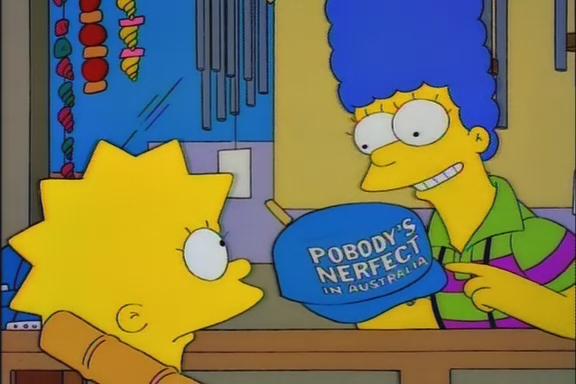
I hesitate on saying this season is a return to form, as that would imply it was a good season. It wasn't. However, it was a return to sensibility. Rarely was the plot so ridiculous it was hard to watch, and there were a scant few occasions where the characters lost their true selves. The only major exception to this is Bart and Millhouse needlessly ruining the visit of a tourist coming to Springfield, but hey - as they say in Australia, pobody's nerfect.


There's simply not a lot to hate about this season. There are a few repeat episodes, but nothing egregiously ripping themselves off. Homer gets a motor home again... they visit Canada once more, but at least this time for a longer time with better results... yet another future episode... another episode that ends by someone yelling "party"... but nothing I'm up in arms about. As with last season, there are a few notable continuity errors, but again they're few and far between (namely Nelson saying his dad left him, although his father came back the previous season and Lisa saying Bart's never done anything for her in spite of a whole montage of them being friendly siblings in the Lisa vs. Bart hockey episode). 

Overall, it's a reasonable, safe season. The problem is it's not a very funny season. There are no standouts on either end of the quality scale, with no terribly regrettable episodes but free from anything that really makes me glad the show has continued its exceedingly long run. This is what the show has come to - not interested in staying relevant, but rather simply staying. Sadly, that's the best we can hope for. Not being angry at this show is the best I've felt in six seasons.

Best Quotes:
"I realized I was an adult when the judge says 'we are trying you as an adult'". 
-Kearney

"Now let's go murder our enemies. Peace."
-Alcatraz, rapper

"Why did Lisa dump me? Is it because of my small calves? They're the hardest place to add mass!"
-Millhouse, large, strong, future version

Best Episode:
Sheesh. I guess I'll give it to "Midnight Rx" in which Homer goes to Canada to get cheap prescription drugs. It's really nothing special, but the Canadian bits are pretty good. I guess this one wins off writer home country bias.

Worst Episode:
Lately this has been pretty easy. Homer destroying churches, being made into a prank monkey, and fighting a bear tends to leave a nasty enough taste in my mouth to barely having to consider my pick. This time around it will go to "Goo Goo Gai Pan" in which Selma goes to get her daughter from China, not because it's a terrible episode but it's the weakest of an entirely mediocre crop. I've grown weary of the "Simpsons visit another country" style episodes (no, Canada doesn't count - it's right there and we're too alike) and it comes across as weaker than the rest and mostly boring.

Monday, 29 June 2015

Simpsons by the Season: 14

"Are you ready for tales that will shatter your spine and boil your blood?!"

What can I say? The show got me down. I finished up the write-up for season 13, ending on a note of resigned sadness and it took me a fair while to recharge and go at it again. I filled the gap with Silicon Valley, and now I'm back with more of The Simpsons as it crawls through it's ever pressing decline into cultural irrelevance.


If season 10, 11 and 12 were awful to the point of anger, this season is more geared towards mild, nagging depression. It's mostly due to the episodes having a number of scenes that harken back to previous episodes or seasons and through that highlight how the show has fallen on tough times. They resemble previous plots, some have potential, and some directly shoot for nostalgia but it really just causes a juxtaposition between new and old they surely wouldn't want to highlight. Unfortunately, the episodes just don't cut like they used to, and everything they had once done so incredibly well - clever humour, satire, commentary - fall by the wayside in exchange for the cheap, easy laugh that's readily available.


Easy humour is the name of the game in season 14, and the best examples come through Marge's body modification. I don't expect some great satire on episodes related to Marge becoming a bodybuilder or getting breast implants, but somehow I was foolish enough to expect more out of the show. "Men like big breasts!" and "bodybuilding women are manly!" might be the best way to churn out episodes, but that doesn't mean you should - it's humour for junior high school students, and little more.


Occasionally they'll reference the past but draw comparisons they perhaps should have left unsaid. "The Great Louse Detective" for example. It's a Sideshow Bob episode in which someone is trying to kill Homer, and Bob actually tries to help the Simpsons. Ultimately, it's the son of the late Frank Grimes. It's not a terrible episode (although certainly not a good one) but it's bound to cause some loyal viewers to think this is one of the weakest Bob eps thus far, and reminds you of how strong it used to be around the time the first Frank Grimes was created. I understand they'll still want to keep Bob in the show, and that's all well and good - but that episode is pumped full of references to past seasons, and that's a dangerous game for a show in decline. Perhaps attempting to breath life into the show with new characters is a good plan, especially with the circumstances of the great Phil Hartman's passing, bringing Lionel Hutz with him. The replacement is - I kid you not - Larry H. Lawyer. Sigh. It's a tough act to follow, but that's rough.

In spite of all the nostalgia in this season, they still forget who the characters are at heart. This season Bart and Milhouse find a way into Flanders' house and ransack the place - in which Bart shows no remorse. Marge assaults a number of innocent people. Homer wrecks the church after acquiring the deed for it and holds a game of strip poker on the front lawn, seemingly just to rub away all that petty morality that had plagued the series for so long. They might bring back the past this season, but we all know it's just a memory now.

Best Quotes:
"My hobbies include: being quiet during trips, clapping with songs, and diabetes!"
-Ned's diary for Rod, demonstrating his knowledge of his son

"That is the most pungent thing I've ever smelled - and I am from India!"
-Apu upon smelling Maggie's diaper

"Let's raise the roof for the bland, informative rap of M.C. Safety and the Caution Crew!"
-From a Springfield Elementary presentation

"All my life I've had one dream; to achieve my many goals."
-Homer

Best Episode:
"Three Gays of the Condo" is my pick. It has a rocky start in which Homer and Marge needlessly feud (again) but when he meets with the gay crowd it's fairly clever and funnier than most of the rest of the season. It's not an A+ episode, but it's pretty solid throughout.

Worst Episode:
"Pray Anything" has Homer take over the church, flood the town for a second time somehow, and has twenty one brutal minutes without a laugh. Worse yet, when the town believes the flood to be God's punishment Lisa explains everything logically - with the worst logic they've ever had. A single bonfire caused enough rain to completely flood the city up to the rooftops. The trees being cut down - for this single bonfire - meant that a "flood was inevitable". If they're going to try to sell an absolutely absurd plot, don't sugarcoat it and pretend it makes sense.

Sunday, 21 June 2015

The One True Nerd: Silicon Valley vs. The Big Bang Theory

Put Silicon Valley and The Big Bang Theory on paper and they're fairly comparable at their core - a band of nerds are unattractive but highly intelligent, stumbling through the world with computers and science as their socially awkward personas hold them back. The characters themselves are even relatively similar on a basic level: the main character and central nerd; the brown guy with an accent; the totally aloof weirdo who provides the core of the most outrageous, unrealistic comic relief; and the bonus religious character (a Satanist and a Jew, the last time I'll ever put those two in the same category). Typically, they'll spew indecipherable jargon you'll be at a loss at understanding unless you're in the specific field. Furthermore, for both of the show centres around the characters' success with women, or lack thereof.  Up until now one sounds like a knockoff of the other despite being them being entirely different programs; it would be like calling The Amazing Race similar to 16 and Pregnant because they're both reality shows. Their delivery in their humour, storytelling and intended audience is how they separate, and it's indicative of the differences between cable T.V. and a network that literally defines itself as more than television: CBC and HBO respectively.

The two shows appeal to vastly different crowds. BBT is a show for the masses, one that's simply easier to digest and meant to be enjoyed by anyone with a television and thirty minutes of spare time. Catchphrases help you find what was funny, and in case you missed it, laugh track reminds you. I mentioned the technical jargon of characters (mostly science mumbo jumbo that the majority wouldn't understand) but it isn't necessary to follow it in the least; in fact, it's better if you don't as many of the jokes centre around the non-physicists reacting to something complicated by simply making note of the fact that no, they in fact are not as smart. They will then demonstrate that by pausing briefly before saying they don't get it. Cue laugh track. That's how you know it was funny. Now, before I go too far, I don't want to say Big Bang Theory is devoid of humour - it's not. It has it's moments, the characters are for the most part likeable and it's better than most of the typical run of CBS shows (I'm looking at you, 2 Broke Girls). Honestly, it's a good show to have on in the background as you're doing something else...

...Which is key to my next point - the show's also differ in their delivery of continuing storylines. While Big Bang Theory has one, it isn't critical to the viewer's understanding of their episode by episode approach. I have not seen the last season or two but whenever I jump into an episode currently I won't miss out on much of the humour. Typically, it'll only be five minutes in before I also understand the crux of the season's plot thus far. Silicon Valley, however, has a linear progression to the storyline that is critical to the understanding of the show. It's not really a comedy that's meant to be tuned in on re-runs, but instead one that is watched steadily one to the next. In essence, it's a binge-watch show rather than a background runner. Unfortunately for shows of this variety, unless it's a comedy that gains almost immediate recognition - which is ultimately exceptionally rare - the viewership simply won't be as high due to accessibility for the viewer past episode one. I feel this is what killed the massively critically acclaimed Arrested Development (before, of course, it's resurrection) as so many of the jokes were based off ongoing themes, much would be lost on those tuning in mid-way through a season - perhaps after hearing of the show's quality. I would bet you anything that even if the two found themselves on the same channel, Big Bang would slaughter the other largely because of this reason. Mass appeal comes through accessibility.

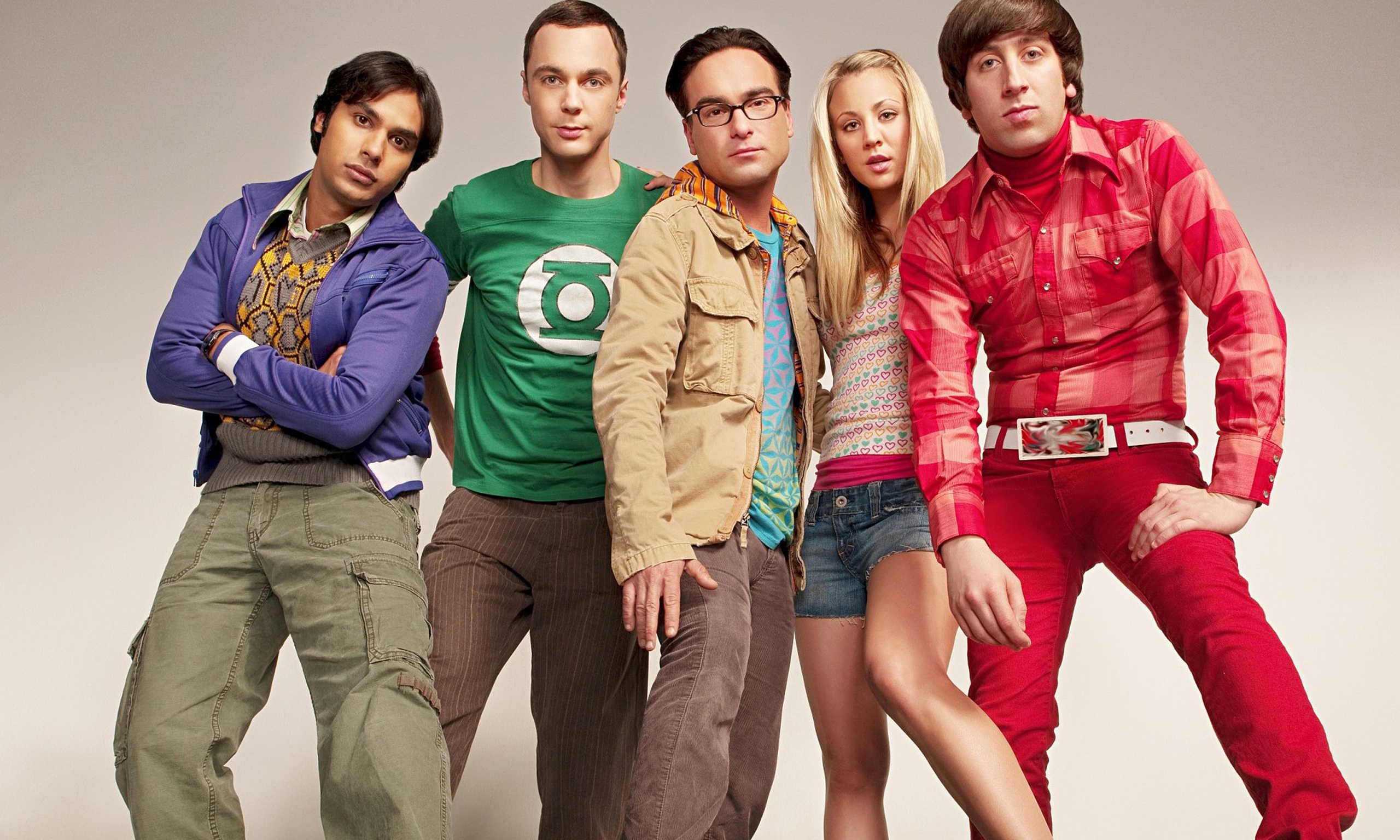
Deep down, the shows reflect what the networks want from them; CBS wants viewers, and thus went the route of mass appeal. HBO wants quality and recognition, and shot for a niche market. So what makes Silicon Valley niche and Big Bang Theory for the masses beyond the base outline of the networks on which they run? I would say take a look at the visuals. BBT is deliberately over the top, colourful, vibrant, filled with graphics on scene switches, and really strikes for excess in a number of ways; whereas Silicon Valley goes for more of a realism approach. That's what makes Silicon Valley niche. It's actually meant for people who are, well, nerdy. It's for those who are coders, programmers, computer geeks and the like or at the very least those that understand that world to some degree. Big Bang Theory is for nerd perception; it's what most people think nerds are like, but really a group that doesn't exist in reality. It's equivalent to the popular girl in high school who says "oh, I'm such a nerd!" because she plays Candy Crush on her phone. I mean, no one in the world dresses like this. It's the same reason all of these men - in spite of being social misfits - stumble their way through to date exceptionally attractive women time and time again, all the while complaining about their failures with wooing the opposite sex. This works because it's America, and you can be successful however you please, and that's the American Dream. On the other hand, the characters in Silicon Valley look the part (save for perhaps some degree of obesity) and after two seasons most of their characters strike out - with, of course, the exception of Erlich, the Silicon Valley version of Sheldon. Here it would be important to note that since they fill the same role in opposite worlds, Erlich is the only one repeatedly successful while Sheldon is reduced to the girl who played Blossom. Silicon Valley lives in the realistic world of lonely programmers, but that's just not what everyone wants to see. What everyone wants to see is Kaley Cuoco (pre-short-hair).

Neither show approaches nerd culture incorrectly (a great number of people will disagree with me on that) as at the core they're simply comedy programs. They're not bringing some sort of agenda, not trying to prove any great point, and if you don't like one or the other you can say it's not your thing and turn the channel. Deep down, it comes down to the same problem Andy Millman had in Extras - 
take the critical acclaim and be seen by few, or be seen by many and pass on the accolades. Personally, I'll watch both. The difference is with one I'll probably be making food with it in the background, and sitting down to watch the other once it's prepared.